The best water fountain for a multi-pet household needs more than a large tank. It must give pets room to approach, keep water available through normal use and come apart easily enough that you will clean it on time. A station that one animal guards is not working for the household, even when it is full.
Quick answer: A multi-pet fountain needs accessible approaches, enough usable refill margin and parts you can clean easily. Compare W600 Pro for 6L cordless use, W600 Plus for a 6L fixed station and A08 for an 8L fixed station. Add separate water points when sharing creates conflict.
On this page
- Access first
- Compare power and models
- Plan locations
- Organize shared care
- Common questions
Start by watching the current water routine. Which pets share happily? Who drinks after everyone else leaves? How quickly does hair or food appear in the bowl? Those observations help you choose features that solve actual problems.
1. Enough access, not just enough litres
A broad drinking surface can make a station easier to use, but sharing still depends on behaviour. Place it where a pet can approach and retreat without being cornered. Leave space for a larger dog to turn without blocking the whole station.
For a shy cat, a second station in another room can be more useful than upgrading one tank. Cornell’s hydration guidance notes that conflict between pets can prevent access to water. Plan the layout for the least confident animal as well as the biggest drinker.
2. Capacity that leaves a usable refill margin
Nominal capacity is the water the product is designed to hold, not the amount that can be used before the pump needs attention. The marked minimum, normal splashing and the number of users all affect the practical refill interval.
Check how far the level falls between your usual daily checks. If it repeatedly approaches the minimum, add a larger station, another water point or a more frequent refill check. Never establish the limit by deliberately letting a pump run dry.
3. A tray and pump you can actually clean
Shared stations can collect hair, saliva and food quickly. Look for removable parts you can grip, an outlet you can reach with the permitted cleaning tool and clear pump maintenance instructions. A complicated assembly is a cost if it encourages you to put washing off.
The filter housing deserves attention as well as the visible tray. Choose exact replacement filters, not a similar-looking cartridge, and budget for the model’s stated schedule with adjustments for heavier use.
4. Manageable handling at the sink
A litre of water adds roughly a kilogram to the load. Large capacity is useful, but lifting a full tank can be awkward. Measure the route to the sink and leave room to drain the reservoir without splashing its electrical parts.
A handle can help with grip; it does not make an overfilled tank weightless. Consider whether another adult will need to handle the cleaning job when you are away.
5. A power routine that matches the location
Cordless operation can help put a second station where pets need it. A plug-in model can simplify a fixed station by removing the recharge task. Either way, keep another source of fresh water available during cleaning or a fault.
| Model | Capacity | Power | Worth considering when… |
|---|---|---|---|
| WOPET W600 Pro | 6L | Rechargeable / cordless | A larger shared station needs cordless placement. |
| WOPET W600 Plus | 6L | Plug-in | You want a 6L fixed station near an outlet. |
| WOPET A08 | 8L | Plug-in | Dogs or multiple cats need a broad 8L station. |
W600 Pro: 6L with cordless placement
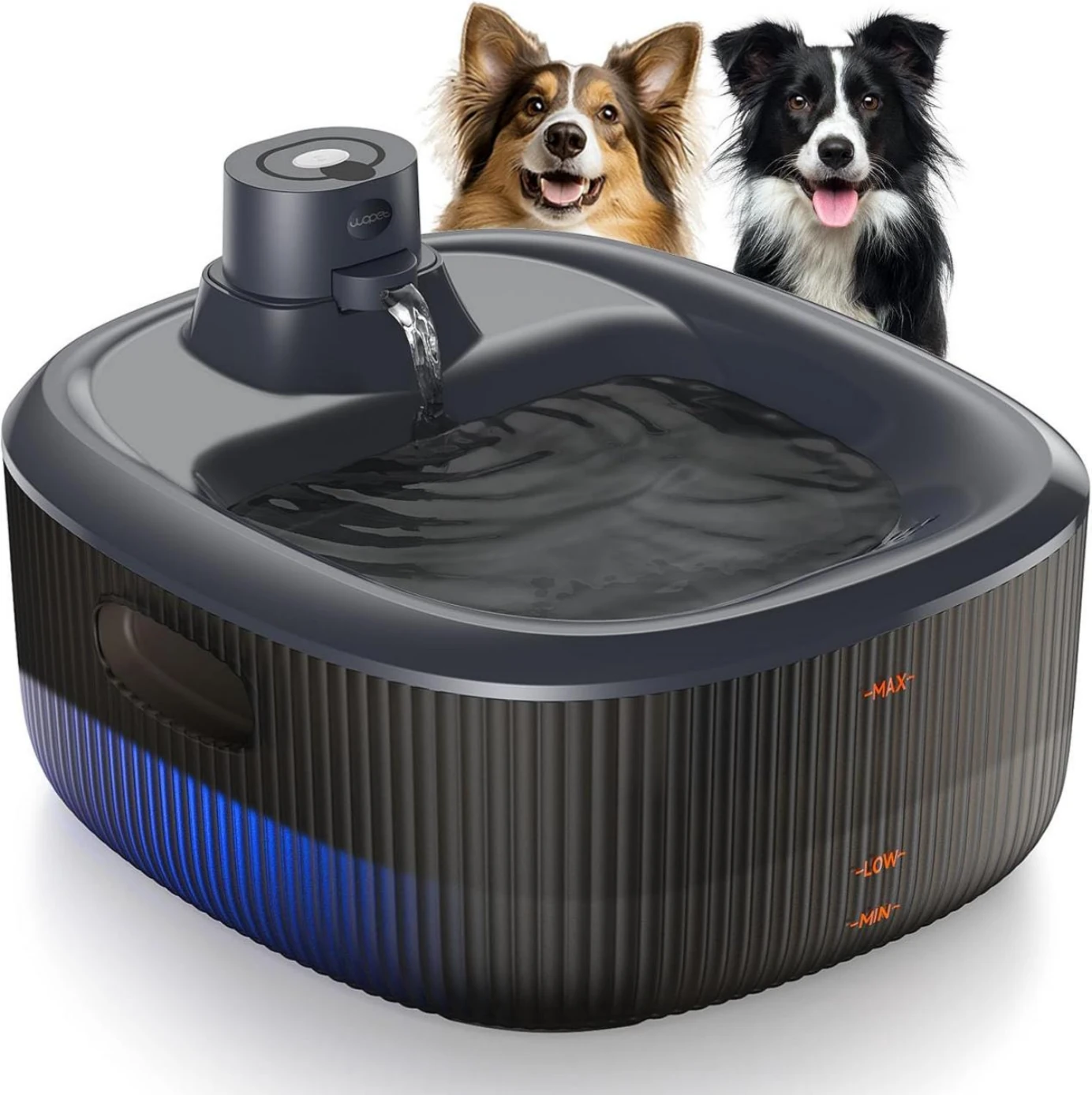
WOPET W600 Pro · 6L · Rechargeable / cordless
The W600 Pro Pet Water Fountain is the rechargeable choice in this group. Compare it when the best shared drinking spot has no nearby outlet. Daily checks need to include charge as well as water level, and shared use can change how frequently its sensor is activated.
W600 Plus: 6L for a fixed station
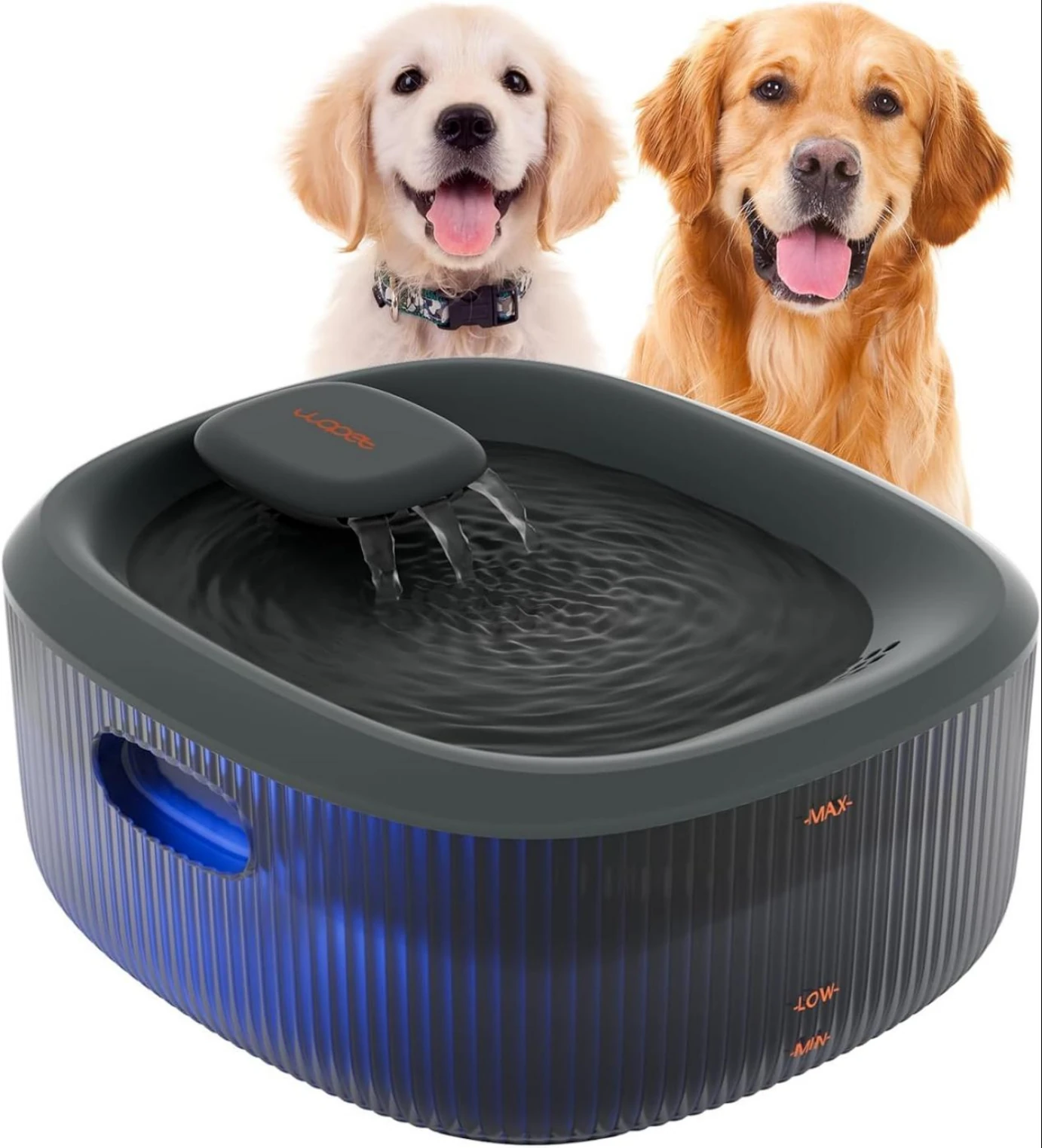
WOPET W600 Plus · 6L · Plug-in
The W600 Plus Pet Water Fountain is plug-in, with a visible level window and a carrying handle. It suits a permanent drinking area near a safe outlet. Use its own assembly and pump-cleaning instructions; the Pro name does not make the two versions interchangeable.
A08: 8L for dogs and multi-cat households
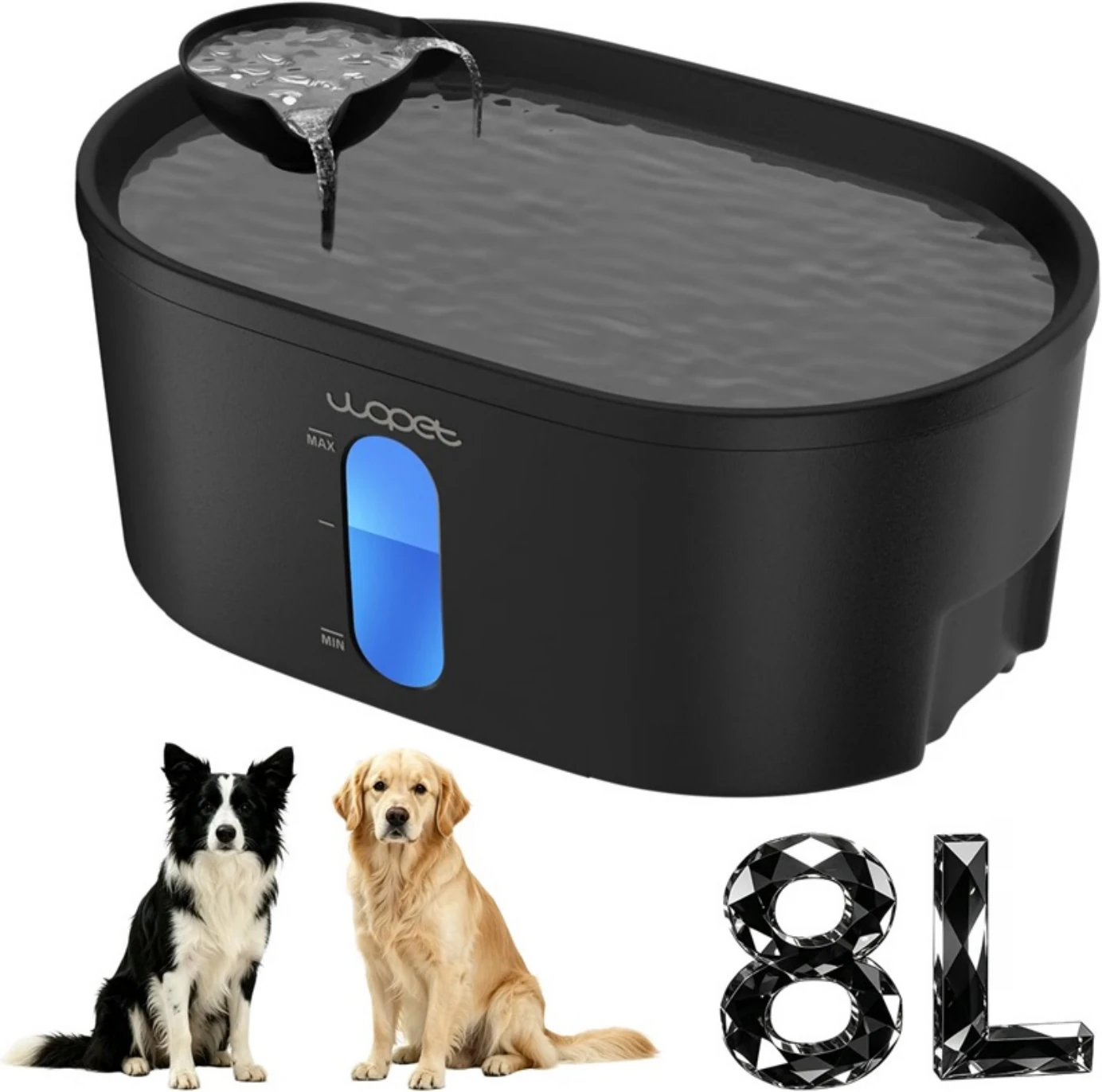
WOPET A08 · 8L · Plug-in
The A08 Pet Water Fountain is a larger plug-in option with a broad drinking area and visible water-level window. It is worth comparing when a 6L station does not leave enough refill room. Make sure the full-tank handling and sink space work before choosing the extra capacity.
A short shared-station routine
| When | Check |
|---|---|
| Daily | Level, visible debris, normal flow and whether every pet has access. |
| After busy use | Spills, food in the tray and hair at the inlet. |
| At washing | Outlet, filter housing, pump parts and signs of damage. |
| When replacing a filter | Exact compatibility and preparation instructions. |
AVMA hygiene advice calls for frequent washing of food and water bowls. Follow the fountain’s component-specific care too; a large shared reservoir is still a used drinking vessel.
Plan the household before the hardware
Sketch the rooms where your pets already spend time and mark current water locations. Look for narrow doorways, busy routes and corners with only one exit. A large tank in an awkward spot can be less useful than two modest sources that pets can reach independently.
Then observe the quietest animal. Does a cat approach only after the dog leaves? Does one pet wait in a doorway? A full tank proves availability in the reservoir, not access for every user. Move or add a station so the hesitant animal has a practical choice.
Do not put every water option into one cluster simply because that corner is easy to clean. If one animal controls the approach, the whole cluster can become inaccessible. Separate locations allow the layout to work even when the pets are not comfortable drinking together.
Work out a refill margin without guessing intake
For several normal days, check how the level changes between your established care visits while keeping the water fresh. Note spills and which pets use other sources. You are assessing how soon the station needs attention, not measuring each animal’s consumption from one shared tank.
If the level repeatedly gets close to the minimum, change the setup before relying on it. A larger reservoir may help, but another station or more frequent checks may be more manageable. Do not wait for the pump to stop to learn the practical limit.
Check the unit’s marked range in its manual. Not every nominal litre is available before the minimum operating level, and the tank must not be filled above MAX. Compare the usable margin with your actual routine rather than calculating unattended days from capacity alone.
Make shared care visible to the household
| Information to record | Example of its purpose |
|---|---|
| Exact model name | Prevents W600 Plus and W600 Pro instructions being mixed. |
| Last full clean | Shows when pump and hidden surfaces were serviced. |
| Filter type and change date | Prevents incompatible purchases or missed replacements. |
| Charge checks for cordless models | Separates power care from water care. |
| Backup water location | Gives helpers a clear alternative during maintenance. |
Keep the record simple enough that everyone uses it. A note beside the supplies can be more effective than a complicated app nobody opens. The person refilling should know whether the last clean included the pump and outlet or only a rinse of the visible tray.
Store dry replacement filters and the manual link together. If another person takes over, show which components stay dry and how to check normal operation after reassembly. Do not assume experience with one fountain transfers to another pump or power system.
Choosing between the three WOPET examples
Choose W600 Pro when the better shared location lacks a nearby outlet and a recharge routine is realistic. Choose W600 Plus when a fixed 6L station already fits the location and you prefer not to add charging. Compare A08 when the 8L reservoir offers useful margin and the larger cleaning job remains manageable.
Before increasing capacity, check the sink route and lifting job. Another water point may offer both easier handling and better access. There is no rule that a multi-pet home must funnel every drink through its biggest fountain.
Common questions
Can one large fountain replace all other water bowls?
Avoid making all pets depend on one station during the trial or during cleaning and faults. Keep another fresh-water source available, and retain separate access where animals do not share comfortably. Capacity alone does not establish reliable access.
Are app records accurate for each pet at a shared station?
That depends on the exact identification system and its documented limitations. Without reliable individual identification, shared visits and tank loss cannot be assigned to each animal. Check the feature rather than assuming “smart” means separate intake measurements.
Should filters be changed sooner with several users?
Use the exact model’s instructions and inspect actual conditions. Heavier use, hair and food can make maintenance necessary sooner than a calendar prompt. Replace the correct compatible part and clean the surrounding housing; a fresh cartridge does not wash the rest of the station.