
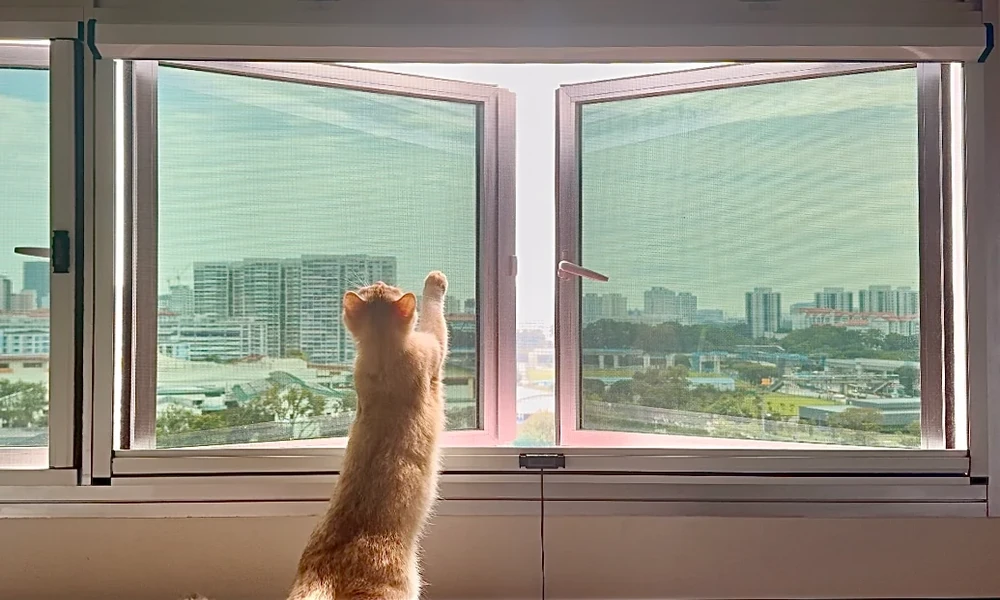
Most cat-proofing conversations start and end with windows, which is understandable but incomplete. A home has many openings, and a cat will find whichever one was overlooked. Balconies, service yards, main doors held open for airflow, air conditioning ledges and gaps behind appliances all present routes to somewhere a cat should not be. Thinking about the home as a whole, rather than window by window, produces a setup that actually holds.
Mapping the Openings
Start with a walk through every room, looking at the space from about knee height where a cat’s route options become obvious. Note every window, including small bathroom and kitchen openings that adults rarely think about. Note the balcony, the service yard and any external ledge. Note doors that get propped open. Then look for the climbing routes a bookshelf beside a window, a washing machine under a high opening, a wardrobe giving access to a transom. A window that seems out of reach usually is not once furniture is factored in.
Windows Remain the Priority
Falls from windows account for the most serious injuries, so this is where to begin. The barrier needs to withstand a cat’s weight leaning against it, which standard insect screening does not. Pet-grade mesh for cats uses heavier gauge material in a properly fixed frame, so pressure from a cat pushing or climbing does not deform or detach the panel. Every reachable opening needs covering, because a single unscreened window in a spare room is precisely the one that gets left ajar on a warm afternoon.
Balconies and Service Yards
These spaces are frequently treated as already enclosed when they are not. Balcony railings have gaps a cat passes through easily, and the parapet itself becomes a perch. Service yards used for laundry usually have unglazed openings with grilles wide enough to slip between. Both can be enclosed with tensioned mesh panels fitted to the existing structure, preserving light and airflow while removing the drop. This also stops the other common problem cats escaping into common corridors or neighbouring units, from which they often do not return.
Doorways That Stay Open
Main doors and balcony doors get opened for ventilation and become the least controlled opening in the home, because people pass through them constantly. A fixed panel is impractical here. A retractable mosquito screen solves it by drawing across the opening when needed and retracting into a slim cassette when not, so the doorway functions normally while a barrier exists whenever the door is open. Magnetic closures at the meeting edge keep the panel shut without a latch, which matters when people are walking through with both hands full.
Interior Hazards Worth Addressing
Screening handles the perimeter, but indoor safety needs its own attention. Cats fit through gaps that look impossibly narrow, so check behind and beneath appliances, inside cabinet voids and around service risers. Secure any tall furniture that could topple when climbed. Keep toxic houseplants, cleaning products and medications behind closed doors rather than on high shelves, since height is no obstacle. Cover or tidy loose electrical cables. Tilt-and-turn windows deserve specific mention a cat that slips into the wedge-shaped gap of a tilted sash can become trapped, which causes serious injury.
Ventilation Without Compromise
The reason unscreened windows stay open is that homes here need airflow. Sealing everything and running air conditioning continuously is costly and makes the space stuffy, which is why partial cat-proofing so often reverts. Properly specified screening avoids that trade-off entirely, windows and doors stay open, air moves through, and the openings are safe. Choosing from a range of insect netting for windows rated for animal contact means one installation delivers ventilation, safety and insect exclusion together.
Health Benefits Beyond Falls
A screened home reduces exposure to mosquitoes for pets as well as people. Cats are affected by mosquito-borne parasites, and reducing bites lowers that risk. Screens also keep out cockroaches, houseflies and other insects that cats will chase and sometimes eat, along with birds and lizards that can carry parasites. For households where someone has allergies, finer mesh reduces the amount of airborne debris entering with the breeze.
Introducing a Cat to the Setup
Most cats accept screens within days, but a few test them persistently at first. Give the cat somewhere better to be a perch or shelf near a screened window provides the view and the airflow it was seeking, which removes the motivation to push at the mesh. Trim claws regularly to reduce snagging. Discourage climbing on the screen itself early rather than after it has become a habit. If a particular cat is determined, that is a reason to specify stronger material and fixed frames rather than to abandon the approach.
Checking It Still Works
Screening is not a one-off task. Inspect panels every few months for loosened fixings, stretched mesh where a cat leans regularly, and separation at corners. Check that magnetic strips remain firmly bonded and that retractable units run freely without the mesh fraying at the edges. Repair damage promptly, since a small tear becomes a cat-sized opening quickly. Keeping the whole perimeter intact is what turns a collection of individual screens into an actual safety system.